Walking into an Arlington attic in July feels like stepping inside an active oven. North Texas summers are brutal on houses, and when energy bills creep up every month, homeowners look at better insulation options. Closed-cell spray foam is the heavy hitter Arlington Spray Foam Insulation recommends when homeowners want maximum R-value and a tight moisture barrier.
Before starting a project like this, it is important to look at how closed-cell spray foam actually works. Closed-cell foam creates a rigid, dense plastic barrier that stops air leaks and handles shifting clay soils and high humidity better than almost anything else. Homeowners in neighborhoods like Dalworthington Gardens and Viridian often ask whether they can install closed-cell spray foam themselves or if they need to hire a professional crew.
Before the Project: Prep Work You Can Tackle
Homeowners do not need a professional rig to handle the prep work, and doing it yourself can save some cash. Arlington Spray Foam Insulation recommends knocking out these tasks before the installation crew rolls up:
- Clear out storage items, holiday decor, and old boxes from the work zone so the crew has a straight shot to the walls or roof deck.
- Shut off pilot lights and HVAC units if you are spraying nearby.
- Seal off any interior doors with plastic sheeting to keep dust and stray particles out of your living space.
- Check your local permit requirements with the city of Arlington if you are doing a major retrofit.
During the Project: Leave This to the Pros
Closed-cell spray foam is not a weekend do-it-yourself project from a hardware store kit. Those little cans and small two-component tanks are fine for sealing a tiny plumbing penetration, but they will not cut it for insulating a whole room or roof line.
Mixing chemical components requires precise temperature and pressure controls. If the ratio is off by even a little bit, the foam will not cure right, it can release a terrible chemical odor that lingers for months, and it might even fail to harden. At Arlington Spray Foam Insulation, we wear full-face respirators and protective gear because the off-gassing during application is serious business. Professional rigs also spray evenly at high volumes, hitting tricky framing corners that a do-it-yourself kit will completely mess up.
After the Project: Curing and Cleanup
Once the pros finish spraying, the foam expands and cures fast—usually within 2 to 4 hours. Arlington Spray Foam Insulation provides these steps for your post-installation checklist:
Give the house plenty of ventilation. Even though the foam cures quickly, professional crews will usually run high-powered fans to air out the space. Keep your HVAC off or vented outside during this window.
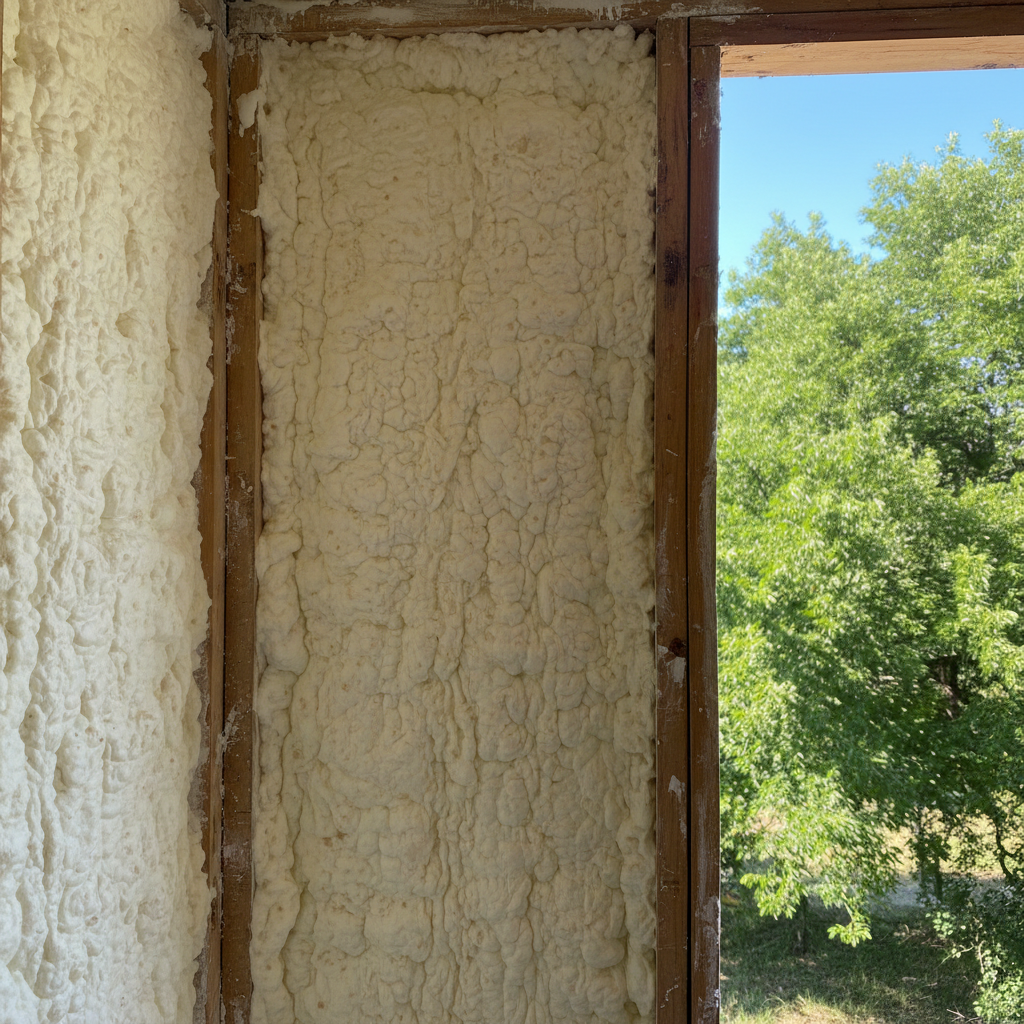
Inspect the work once it is hard to the touch. You want to see a uniform, rigid surface that completely fills the framing cavities without pulling away from the wood. If you spot any thin spots, call Arlington Spray Foam Insulation back out to touch it up.
Enjoy the drop in your monthly electric bill. Once that closed-cell spray foam locks out the Texas heat, you will notice your AC units are not running nearly as hard, and your home in Arlington will finally hold a comfortable temperature.