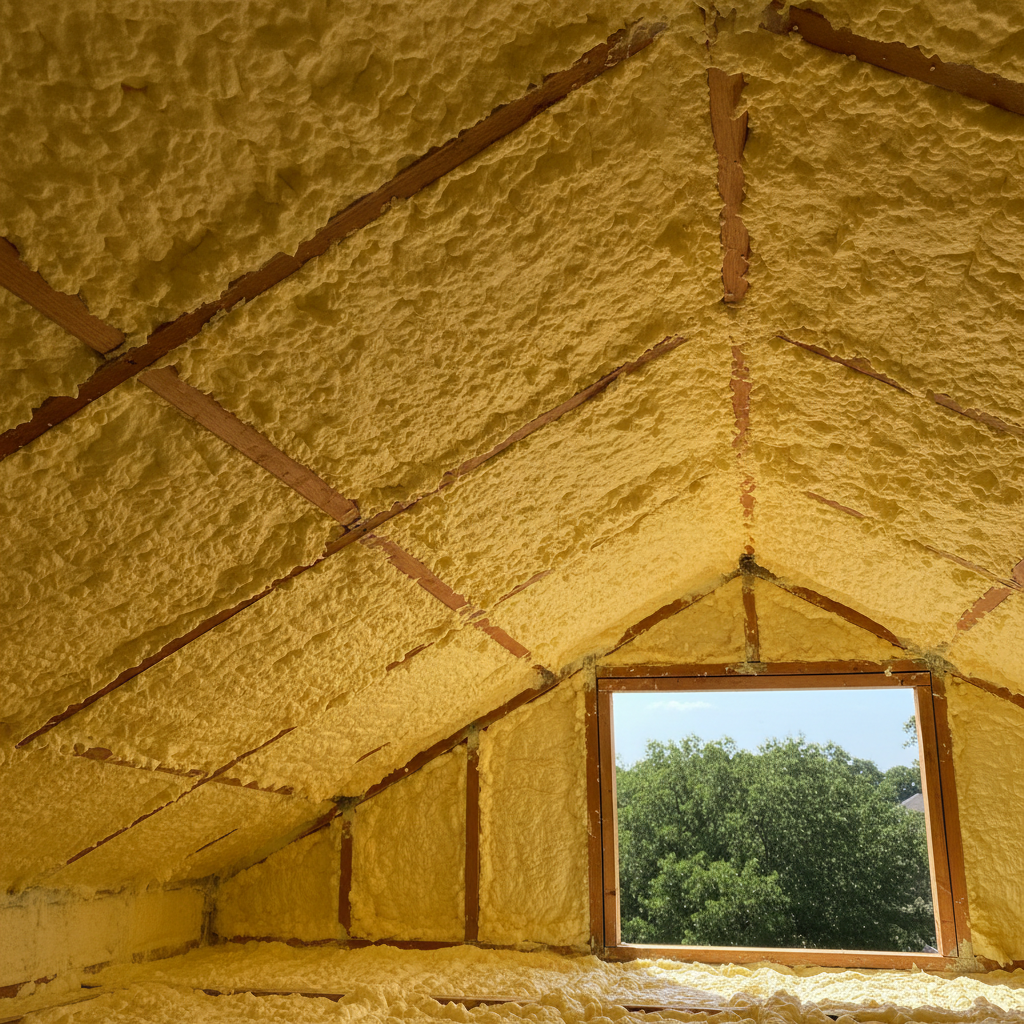
Alright, let's talk about closed-cell spray foam. You've probably heard the buzz, seen the ads, maybe even watched a few videos. It's a fantastic product, no doubt, but it's not a magic bullet, and it's definitely not a weekend warrior project for just anyone. I've been doing this for years here in Arlington, and I've seen a lot of folks try to go it alone only to end up with a mess or, worse, a poorly insulated home that costs them more in the long run. So, let's get real about what closed-cell spray foam is, what it does, and what you need to know before, during, and after the job.
What Even Is Closed-Cell Spray Foam?
Simply put, it's a type of insulation that expands when it's sprayed, but unlike its open-cell cousin, it cures into a much denser, rigid material. The cells within the foam are closed, trapping a gas that helps it achieve a higher R-value per inch. What does that mean for you? It means better insulation in a thinner layer. It's also a fantastic air barrier and a pretty good vapor barrier, which is huge here in North Texas with our wild humidity swings. Plus, it adds structural rigidity to walls and ceilings, which can be a real bonus.
Before You Even Think About Spraying
This is where most DIY dreams hit a wall, and for good reason. Before you even consider renting a rig, you need to ask yourself a few tough questions.
- Is it the right product for the job? Closed-cell is great for crawl spaces, exterior walls, rim joists, and metal buildings. It's dense, so it can handle moisture better than open-cell, and it's less likely to absorb water if you have a leak. But if you're insulating an attic floor where you want to store stuff and don't need the vapor barrier, open-cell might be a better, more cost-effective choice.
- Are you prepared for the prep work? This isn't just about throwing down a tarp. You've got to clear the area completely. We're talking removing old insulation, cleaning surfaces, sealing off HVAC ducts, and protecting anything you don't want foam on. Overspray is a nightmare to clean up. Seriously, it sticks to everything.
- Do you understand the safety? This isn't paint. Spray foam chemicals, especially during application, require serious PPE: respirators, gloves, full-body suits, eye protection. The fumes are no joke, and you need proper ventilation. If you're not set up for this, you're putting your health at risk.
- Do you have the right equipment? Renting a small DIY kit might seem appealing, but those often use less powerful equipment and smaller tanks, which can lead to inconsistent application, wasted material, and a less effective insulation job. Professional rigs are expensive for a reason – they deliver consistent pressure and temperature for a perfect mix every time.
During the Application: DIY vs. Pro
Let's be blunt: closed-cell spray foam is almost never a DIY job for a homeowner. I'm not saying you can't do it, but the learning curve is steep, and the margin for error is tiny. I've seen folks try to spray their own crawl spaces in older Arlington homes, thinking they'll save a buck. What they end up with is often uneven coverage, areas missed entirely, or foam that didn't cure right because the mix was off. This leads to poor performance and potentially off-gassing issues.
When you hire a pro like Arlington Spray Foam Insulation, you're not just paying for the material; you're paying for expertise. We know how to prepare the site, how to calibrate the equipment for the specific temperature and humidity conditions (which can change drastically even in a single day here), and how to apply the foam evenly for maximum R-value and a complete air seal. We've got the safety gear, the experience, and the right tools to get it done right the first time. The cost of fixing a bad DIY spray foam job often far outweighs the initial savings you thought you'd get.
After the Foam is Sprayed
Once the foam is applied and cured, it's pretty hands-off, but there are still a few things to keep in mind.
- Curing Time: The foam cures quickly, usually within minutes, but it's best to allow a full 24-48 hours for the area to air out and for any residual odors to dissipate. Your contractor will advise you on when it's safe to re-enter the space without a respirator.
- Inspection: Take a good look at the finished product. It should be uniform, fully adhered to the surfaces, and completely fill the cavities. There shouldn't be any gaps or areas where the foam looks crumbly or unexpanded.
- Covering the Foam: In many areas, especially in living spaces, spray foam needs to be covered by an approved thermal barrier, like drywall, for fire safety. This is a code requirement, so make sure you understand what's needed for your specific application.
- Long-Term Benefits: You'll start noticing the difference immediately. Your home will be quieter, more comfortable, and your HVAC system won't have to work nearly as hard. This translates directly into lower energy bills, which is a big deal when those Texas summers really kick in. You'll especially appreciate it during those 100-degree stretches we get.
Look, I'm all for homeowners tackling projects they can handle. But when it comes to closed-cell spray foam, for most folks, it's a job best left to the professionals. You'll get a better result, a safer application, and ultimately, a more comfortable and energy-efficient home without the headache. Give us a call if you're thinking about it; we're always happy to talk through your options and give you an honest assessment.