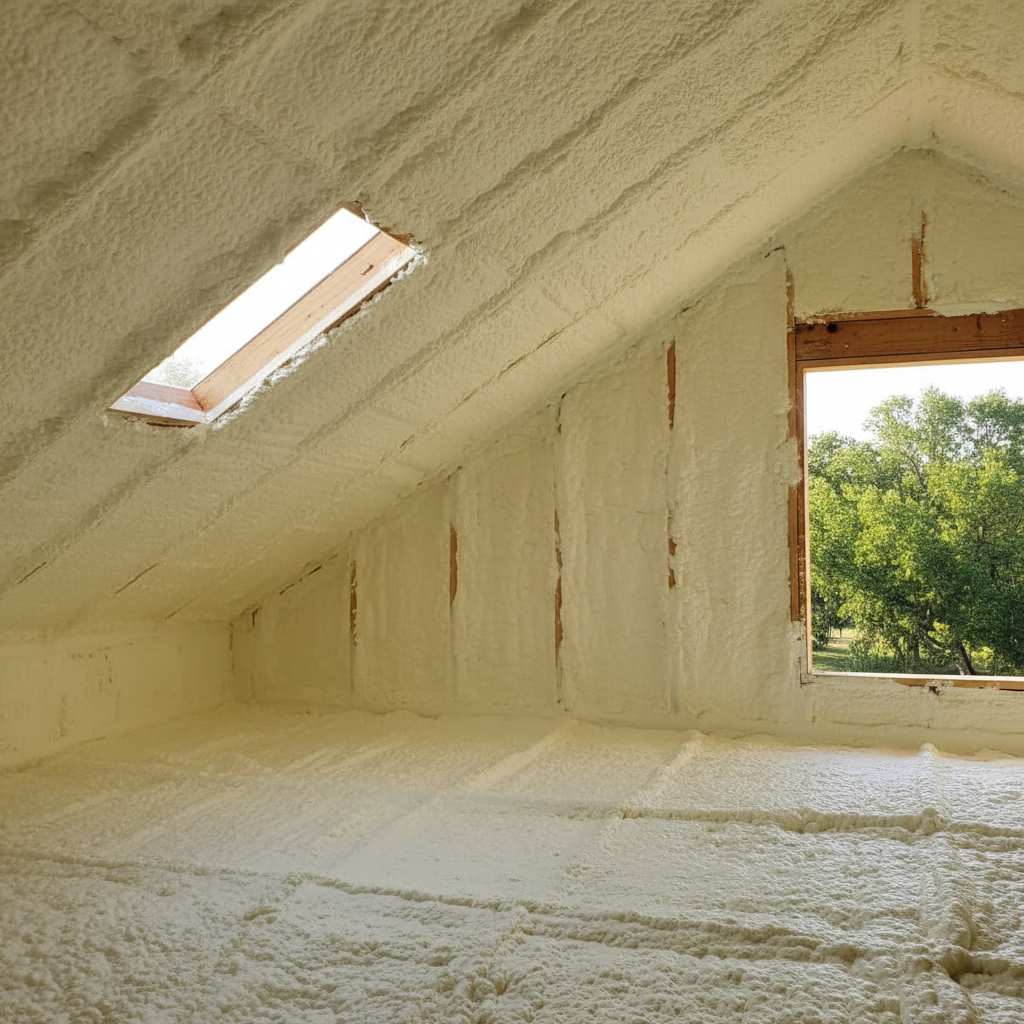
Alright, let us talk about Closed-Cell Spray Foam. You have made a smart choice for your Arlington home. This is especially true with our hot summers as well as those sudden temperature changes we get. People often think once it is in, you never have to think about it again. For the most part, that is true. Properly installed Closed-Cell Spray Foam can last 80 to 100 years. It often lasts for the entire lifespan of your house. This is a huge leg up on traditional insulation. Traditional insulation might need replacing every 20-30 years. Minimal maintenance does not mean no maintenance. A little attention can make sure your foam keeps doing its job perfectly. It will work year after year through every Texas heatwave as well as every cold snap.
Extending the Life of Your Closed-Cell Spray Foam Investment
The biggest factor in how long your Closed-Cell Spray Foam lasts is how well it was installed. Our team at Arlington Spray Foam Insulation cannot stress this enough. If the mix was off, or it was not applied right, you will have problems later on. That is why choosing a reputable contractor like Arlington Spray Foam Insulation is important. We know our stuff when it comes to getting it right the first time. We make sure your Closed-Cell Spray Foam is installed correctly in Arlington. Arlington Spray Foam Insulation takes pride in our work.
Beyond that initial quality, here is what you can do:
- Protect your Closed-Cell Spray Foam from the Sun: This is an important one. The Texas sun beats down hard on homes in Arlington. If your Closed-Cell Spray Foam is exposed to direct sunlight, it needs protection. This can happen in a vented crawl space or a rim joist area that sees daylight. UV rays will degrade the surface of the foam. It will make it yellow as well as chalky. It will eventually break down. Damage can start showing in weeks, not years. You must make sure any exposed foam is covered. This means using a thermal barrier like drywall. You can also use a protective coating designed for spray foam.
- Keep your Closed-Cell Spray Foam Dry (Mostly): Closed-Cell Spray Foam is highly resistant to moisture. This is one of its strong points. It is especially good in our humid climate in Arlington. It acts as a vapor barrier. It blocks moisture from passing through. However, it is not completely waterproof. Prolonged exposure to standing water or extreme humidity can still cause issues. This mainly affects the building materials it is adhered to. If the wood framing behind it gets wet and starts to deteriorate, the foam's adhesion can suffer.
- Mind Your Pests: Closed-Cell Spray Foam is dense as well as rigid. This makes it much harder for pests like rodents and insects to chew through. It is harder than softer insulation. It also helps seal up those tiny gaps pests use to get in. But it is not entirely foolproof. A determined rodent might still try. This is especially true if there is a food source nearby. Keeping your Arlington home sealed as well as free of other pest attractants is still important.
Regular Check-ups for Your Closed-Cell Spray Foam: What to Look For
You do not need to be an insulation expert to do a quick visual inspection. Our team recommends doing this twice a year. You can do it in the spring as well as in the fall when the weather is milder. It is all about catching little things before they become big headaches. This helps maintain your Closed-Cell Spray Foam in Arlington.
- Visible Damage to your Closed-Cell Spray Foam: Look for any cracks, gaps, or areas where the foam might have pulled away from the surface it is attached to. Closed-Cell Spray Foam is dimensionally stable. However, extreme temperature swings can cause stress. This happens if it was not installed perfectly.
- Discoloration of your Closed-Cell Spray Foam: Yellowing or chalkiness on exposed foam is a sign of UV degradation. Dark spots or patches could mean moisture issues. It could also mean chemical instability if the foam was not mixed right.
- Soft or Spongy Areas in your Closed-Cell Spray Foam: Properly cured Closed-Cell Spray Foam should be hard as well as rigid. If you find any spots that feel soft or spongy, that is a red flag. It could mean the foam did not cure correctly. It could also mean there is moisture trapped behind it.
- Unusual Odors from your Closed-Cell Spray Foam: A persistent chemical smell is a sign of a problem. This is especially true after the initial curing period. The curing period is usually 24-48 hours. It means the foam might not have been mixed correctly. It could be off-gassing.
- Pest Activity near your Closed-Cell Spray Foam: This is rare. Check for any signs of pests trying to get through the foam.
Warning Signs That Something is Wrong with Your Closed-Cell Spray Foam
Sometimes, the signs are not visible on the foam itself. You will feel them in your Arlington home. Our Texas climate really puts insulation to the test. This includes high humidity as well as brutal heat.
- Unexpected Drafts: If you are suddenly feeling cold spots or drafts, your foam might have a gap or crack. These areas were previously sealed as well as comfortable.
- Increased Energy Bills: One of the main reasons you get spray foam is to save on heating as well as cooling. If your energy bills start creeping up, your insulation might not be performing as it should. This is true if there is no good explanation.
- Moisture or Condensation: This is important. Closed-Cell Spray Foam is a good moisture barrier. However, if it traps moisture behind it, you have trouble. This can happen because of a pre-existing leak or improper application. Look for persistent condensation on windows or walls. Look for musty odors. You might also see water stains or mold growth. This is especially important in places like Arlington where we get a lot of humidity. If moisture gets trapped, it can lead to wood rot. It can also cause structural damage that goes unnoticed for a long time.
- Structural Changes: In very rare cases, if foam is over-applied or improperly installed, it can put stress on framing. This can lead to bowed studs. It can also cause cracked drywall or distorted window frames.
When to Call a Professional for Your Closed-Cell Spray Foam (Like Us!)
You are not expected to be an insulation expert. That is our job at Arlington Spray Foam Insulation. If you see any of those warning signs, or even if you just have a gut feeling something is not right, pick up the phone. Do not try to fix it yourself. This is especially true with issues like persistent odors or widespread moisture. Improperly mixed foam can be a real health hazard. Trying to patch serious issues can make things worse. Arlington Spray Foam Insulation is here to help homeowners in Arlington.
Here are times you absolutely need to call in a professional for your Closed-Cell Spray Foam:
- You notice persistent chemical odors that do not go away.
- You find soft, sticky, or discolored foam. This is especially true in large areas.
- There is evidence of water intrusion. This includes mold, rot, or persistent dampness. This is especially true if it seems to be behind the foam.
- You are seeing significant as well as unexplained spikes in your energy bills.
- You are planning major renovations that might disturb the foam.
A good professional will have the right tools. This includes infrared cameras as well as blower doors. They will properly diagnose issues you cannot see. They will know how to safely address the problem. This could be a minor repair or something more involved. Your Closed-Cell Spray Foam is a long-term investment. It helps with your Arlington home's comfort as well as efficiency. With a little vigilance and knowing when to call the cavalry, it will keep serving you well for decades to come. Arlington Spray Foam Insulation is ready to assist you.