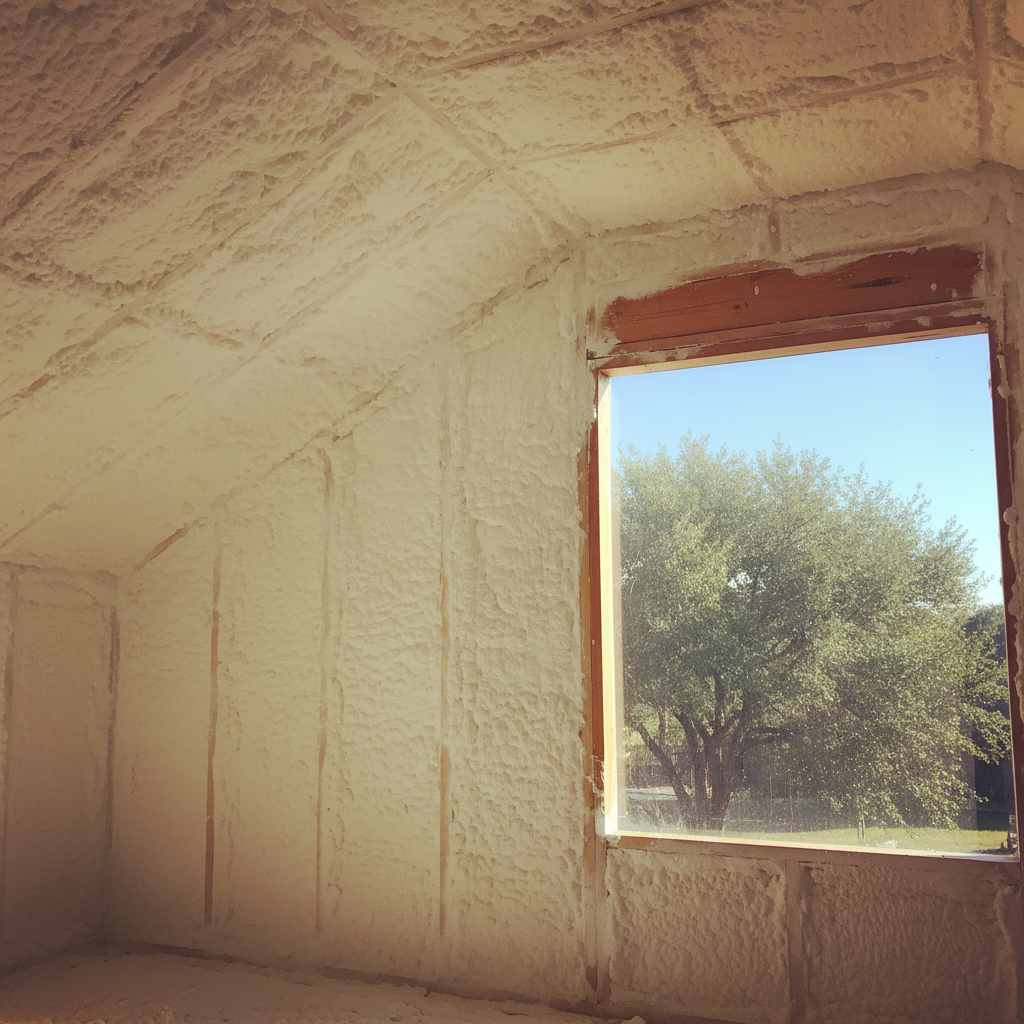
What exactly is open-cell spray foam, and how's it different from closed-cell?
Alright, let's get this straight from the jump. Open-cell spray foam is a type of insulation that, once it cures, ends up with a bunch of tiny, interconnected air pockets — we call them 'cells.' Picture a sponge, if you will. It's soft, flexible, and pretty lightweight. We usually put it on at about half a pound per cubic foot, so you'll often hear it called 'half-pound foam.'
Now, closed-cell? That's a whole different animal. Its cells are completely sealed off from each other, like a bunch of tiny, inflated balloons. It's way denser, rigid, and heavier, typically two pounds per cubic foot. Because those cells are sealed, closed-cell foam actually works as a vapor barrier and can even add structural strength. Open-cell, on the other hand, lets moisture pass right through it, and it doesn't really add much structural rigidity. Each type has its place, but for most attics and wall cavities here in Arlington, open-cell is a fantastic choice for keeping things warm (or cool!) and dampening sound.
Is open-cell spray foam safe for my family and pets once it's installed?
Absolutely, yes. This is a big one, and I totally get why folks worry about it. When we apply open-cell foam, there's a chemical reaction happening. During that reaction, and for a short time afterward, you really don't want to be in the space. That's why we always tell homeowners to clear out for at least 24 hours after we're done. We just want to make sure all the off-gassing is complete and the foam has fully cured.
Once it's cured, though, it's inert. It won't off-gas harmful chemicals into your home, period. It's actually considered a 'green' product by a lot of standards and doesn't contain formaldehyde or CFCs. It's also fire-rated, meaning it meets specific safety standards. Trust me, I wouldn't put anything in your home that wasn't safe, and I certainly wouldn't put anything like that in my own house.
How long does open-cell spray foam last in an Arlington home?
This stuff is built to last. Seriously. Once open-cell spray foam is in place and cured, it won't sag, settle, or degrade like some of those traditional insulation materials. It sticks right to the surfaces, filling every nook and cranny, and it stays put. You're looking at a lifespan that typically matches the life of your home. We're talking decades — 50, 80, maybe even 100 years. It won't break down, rot, or provide a food source for pests. It's pretty much a one-and-done solution for insulation, which is a huge benefit for homeowners who don't want to worry about reinsulating down the road.
Will open-cell foam help with my high utility bills and make my home more comfortable?
You bet it will. This is where open-cell spray foam really shines. Traditional insulation often leaves gaps and voids, letting your expensive conditioned air escape and outside air sneak in. Open-cell foam expands to fill every single cavity, creating an incredibly tight thermal envelope. This means your HVAC system doesn't have to work nearly as hard to keep a consistent temperature.
I've seen homes in Arlington, especially some of those older brick ranches in Pantego, where utility bills drop significantly after we've installed open-cell foam. Not only that, but you'll notice fewer drafts, more even temperatures throughout your house, and a quieter indoor environment because it also helps with sound dampening. It's not just about saving money, you know? It's about living more comfortably, especially during those brutal Texas summers.
What about moisture and humidity? Is open-cell foam a problem in our humid climate?
This is a common concern, especially here in North Texas where humidity can be a real beast. It's true that open-cell foam is permeable to water vapor, meaning moisture can pass through it. This is actually a good thing in many applications, particularly in attics, because it allows any incidental moisture to dry out. You certainly don't want moisture getting trapped and leading to mold or rot.
The key is proper installation and knowing where to use it. We always make sure the attic is properly vented or sealed, depending on the specific application, and that there are no active leaks. If you've got a leaky roof, you need to fix that first, no matter what insulation you're using. Arlington Spray Foam Insulation always assesses your home's specific situation to recommend the right solution, making sure moisture isn't an issue.
Can open-cell spray foam help reduce outside noise?
Oh yeah, it's great for that. Because open-cell foam is soft and has all those interconnected air pockets, it's excellent at absorbing sound waves. Think about it: traditional batt insulation is designed primarily for thermal resistance. It doesn't do much for noise.
But when you fill a wall cavity or an attic with open-cell foam, it creates a dense, sound-absorbing barrier. If you live near a busy street, or maybe you've got noisy neighbors, or even just want to quiet down a media room, open-cell foam can make a noticeable difference. It'll make your home a much more peaceful place to be, cutting down on both airborne and impact noises.
What's the typical cost for open-cell spray foam installation?
Cost is always on people's minds, and it's a fair question. The truth is, there's no one-size-fits-all answer because every home is different. The cost of open-cell spray foam depends on several factors: the total square footage of the area being insulated, the depth (or R-value) you need, and the complexity of the job — for instance, how easy it is to get to the spaces. It's generally more expensive upfront than traditional fiberglass or cellulose insulation.
However, you've got to look at it as an investment. The energy savings alone can often lead to a payback period of just a few years. Plus, you get all those other benefits like improved comfort, better indoor air quality, and sound reduction. We always provide a detailed, no-obligation quote after we've had a chance to look at your specific project. That way, you know exactly what you're getting into.
Will open-cell spray foam affect my home's resale value?
Definitely. Think of it this way: when buyers are looking at homes, especially in a competitive market like Arlington, they're looking for value and efficiency. A home with modern, high-performance insulation like open-cell spray foam is a huge selling point. It signals to potential buyers that the home is well-maintained, energy-efficient, and will be comfortable to live in.
You're essentially selling a home with lower utility bills and superior comfort already built-in. That's a tangible asset. It can make your home stand out, attract more serious buyers, and potentially command a higher asking price. It's not just an upgrade for you while you live there; it's an upgrade that pays off when it's time to sell too.